

By Saintmoses Eromosele

Nations do not mature by accident. They mature by choice—often painful, frequently misunderstood, but ultimately decisive. Nigeria today is passing through such a season. What some hastily labelled disorder is revealing itself as correction. What others dismissed as cruelty is settling into coherence. And what many predicted would collapse is, quietly and stubbornly, holding its ground.

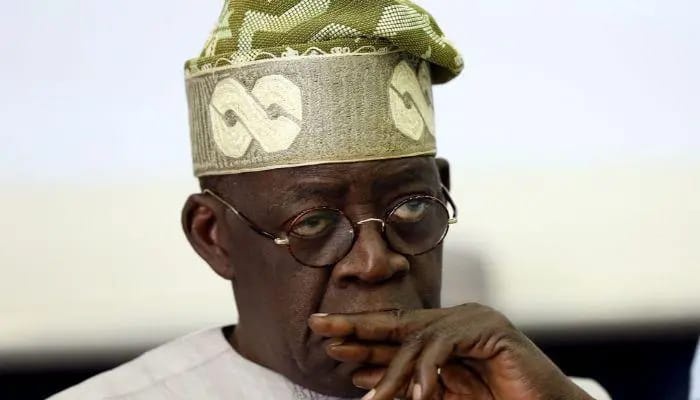
The recent reduction of petrol prices to ₦699 per litre by the Dangote Refinery should be read in this context. It was neither charity nor coincidence. It was the outcome of deliberate statecraft—hard, unpopular decisions taken early by President Bola Ahmed Tinubu and sustained by a disciplined governing structure by his party, the All Progressives Congress (APC). This is what reform looks like when it is built on policy rather than performance. The structure came before the relief.


For decades, December in Nigeria followed a familiar and punishing pattern: fuel price increases, queues stretching into frustration, and the annual search for scapegoats. This year disrupted that pattern. Prices fell. Queues eased. Curiously, what followed was not celebration, but silence. That silence does not negate the fact; it merely exposes the discomfort progress creates for those invested in stagnation. Facts, history reminds us, do not require applause.
The Tinubu administration embarked on reforms that were never designed to be popular. Fuel subsidy removal, foreign-exchange liberalisation, fiscal discipline, and market correction were not crowd-pleasing gestures. They were acts of governance in the classical sense. By dismantling distortions that rewarded a few while burdening the many, these policies reopened space for competition, domestic production, and rational pricing.
Dangote executed the price cut, but Tinubu’s policy made it possible.
Beyond fuel, Nigeria’s economy is showing tentative but meaningful signs of stabilisation. Independent market price tracking across several regions suggests easing food prices—particularly staples such as rice, beans, grains — as supply chains adjust and logistics costs moderate. This matters because it is not a global phenomenon.
In cities such as London, Paris, and parts of Canada, food and fuel prices remain high. Across Africa, economies like Ghana, Kenya, and South Africa continue to battle persistent food and energy inflation. Nigeria’s recent moderation is therefore not borrowed fortune. It is local, policy-driven, and earned.

The naira, after a painful but necessary adjustment, is beginning to find balance—reflecting resilience rather than illusion. Investor sentiment, long cautious, is slowly recalibrating in response to policy coherence rather than political noise. These are not miracles; they are signs of an economy relearning discipline.
Reform, however, does not mature on government action alone. It matures when citizens align daily choices with national purpose. Nigerians must now think Nigeria, eat Nigeria, wear Nigeria, and buy Nigeria. Patriotism must move from rhetoric into the marketplace. Nations industrialise not on hope, but on demand.
Clarity is equally essential. History warns that foreign ‘concern’ often grows loudest when African societies begin reclaiming economic sovereignty. Chaos is profitable to some; stability is not. Nigerians must reject invitations or temptations to regression—no coups, no foreign interventions, no shortcuts. Sustainable progress requires democratic continuity and patience.
Reform must also be matched by humility in power. In times of shared sacrifice, ostentation by public officials offends both reason and justice. Modesty, restraint, and seriousness are not moral luxuries expected of those who hold power in Nigeria; they are political necessities.
I wholeheartedly supported President Tinubu’s election in 2023. Like many Nigerians, I wrestled with doubt as the reforms bit hard. Today, those doubts have given way to clarity. The direction is visible. The structure is taking shape. The results, though uneven, are real.
Measured by evidence rather than emotion, Tinubu’s administration is emerging as one of the more consequential reform efforts in Nigeria’s post-military history. Its scale, ambition, and willingness to absorb political cost distinguish it from many past attempts at adjustment. Continuity, therefore, is not blind loyalty; it is strategic wisdom.
Nigeria’s experience offers a lesson familiar to reforming states and economies in transition everywhere: correction precedes comfort, discipline precedes growth, and continuity determines success. The hardest part of reform is not policy design—it is staying the course.
Copyright 2025 — SME MEDIA NG.











Discussion about this post