By Idowu Ephraim Faleye +2348132100608


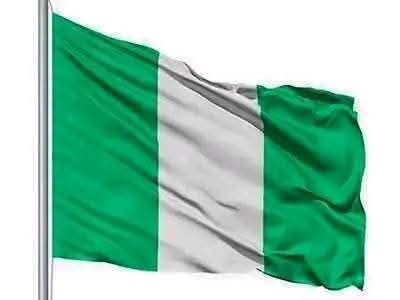
Today Nigeria turns sixty-five. Ordinarily, independence anniversaries should be moments of pride and joy, a time to look back at how far we have come and look forward with hope to where we are going. But for Nigeria, each October 1st seems to provoke more questions than answers. And the most honest of them is this: sixty-five years later, whose Nigeria are we celebrating?


Is it the Nigeria of an ethnic group that still believes the country belongs to them as a private estate? Or is it the Nigeria where another ethnic group still feels bitter that they were forced into the union? Is it the Nigeria where the youth no longer believe in the future of their own country, or the Nigeria where foreigners cross our borders freely to terrorize citizens? Is it the Nigeria where we do not even know our true population, or the Nigeria where leaders continue to govern without data? These questions are not rhetorical—they define the contradictions of our existence.




When the Union Jack was lowered in 1960, our founding fathers promised a country of hope, abundance, and freedom. But what we got instead was a Nigeria where yesterday consumed tomorrow, and today’s citizens are left to pay the painful price. Decades of reckless policies and greed have left us bleeding. We squandered oil wealth on waste instead of building industries. We shared revenue instead of creating productivity. We lived on borrowed comfort and postponed the truth. That is why the harsh realities of today are not just punishments from one administration—they are the accumulated consequences of generations that chose to eat the seed instead of planting it.
And yet, instead of accepting this truth and changing course, we continue in circles. Our public conversations are dominated by excuses, our leaders by sentiments, and our citizens by denial. For years, Nigerians celebrated cheap petrol as a right, but in truth it was a trap. We celebrated easy access to imported goods, but it only fueled unproductivity. We tolerated leaders who governed by slogans, but now we are shocked at the emptiness of the treasury. This is not fate—it is the Nigeria we built, knowingly or unknowingly.
Religion, which should have helped to shape values and discipline, has too often become another opium. We are a country overflowing with churches and mosques, but we are also a country drowning in criminality, poverty, corruption, and insecurity. Faith without works has become our national philosophy. We pray without producing. We fast without planning. We sow seeds in offering baskets but not in the soil. A country where miracles replace work cannot prosper. If our churches and mosques had been made to focus on entrepreneurship, innovation, and agriculture, Nigeria would not be begging the world for aid today. The pulpit should inspire productivity, not laziness.
Even the once mighty Nigerian military tells a sad story. Once upon a time, our armed forces were respected across Africa. Nigerian soldiers restored peace in Liberia and Sierra Leone, and the continent saluted our strength. But today, we struggle to defeat insurgents at home. It is not because our soldiers lack courage. It is because betrayal and corruption have weakened the system from within. Too often, the loyalty of some within the ranks is to tribe or sect rather than to the nation. The result is that enemies thrive while soldiers die. Nothing demoralizes an army more than knowing that their sacrifices are sabotaged by the very leaders who should protect them. A country that cannot protect its citizens cannot celebrate independence with honesty.
But perhaps the most painful tragedy of all is the wasting of a generation. Nigeria has a youth population that should be our greatest strength, yet it is fast becoming our greatest weakness. Too many young people no longer believe in Nigeria. They see shortcuts as the only way out. They chase fraud, rituals, drugs, or migration as the easiest escape routes. Parents, desperate to shield their children from hardship, often indulge them with money and gadgets but forget to instill values. We are raising a generation rich in smartphones but poor in morals. If this continues, we risk a demographic time bomb where the future is destroyed before it even arrives.


So again, whose Nigeria are we celebrating at sixty-five? Certainly not the Nigeria of our founding dreams. What we are celebrating is a nation that has survived in spite of itself. A nation that has refused to collapse completely, even though all the conditions of collapse are present. And maybe that stubborn resilience is itself worth something—but it is not enough. Survival is not the same as success. Endurance is not the same as progress.
The time has come for us to stop lying to ourselves. Nigeria will not change by miracle. Nigeria will not change by wishful thinking. Nigeria will not change simply because we shout “God bless Nigeria” every October 1st. Nations are built by discipline, sacrifice, productivity, and truth. If we want a different Nigeria in the next sixty-five years, we must begin to plant differently today.
That means leaders must govern with data, not sentiment. It means religion must drive productivity, not just piety. It means the military must be restored to integrity, not betrayal. It means our youth must be reoriented toward work, skills, and discipline. And it means every Nigerian must accept that independence is not about waving flags or singing an anthem—it is about taking responsibility for our destiny.
So today, when the President makes his speech and the jets fly over Abuja, let us not deceive ourselves that this is true celebration. It is at best a sober reminder of what we could have been and what we still can be—if we choose. We cannot change yesterday, but we can stop devouring tomorrow. We can decide that the next generation will not inherit the same failures. We can build a Nigeria that truly belongs to all and not to one ethnic group, one religion, or one elite class.
Sixty-five years later, we owe ourselves honesty. Whose Nigeria are we celebrating? The answer will determine whether in another sixty-five years there will still be a Nigeria to celebrate at all.
Idowu Ephraim Faleye|EphraimHill DataBlog-Freelance writer,Independent stories, Data-driven Insights