


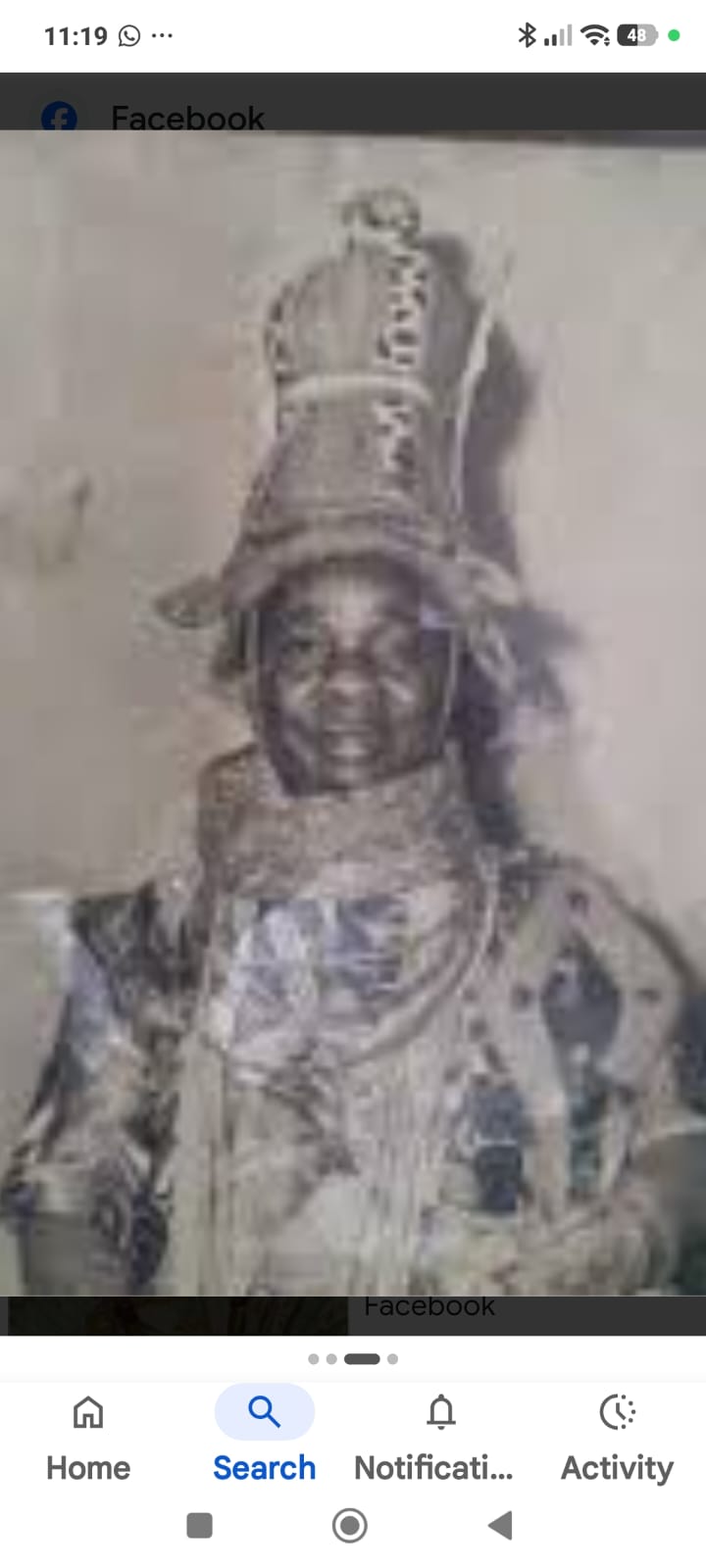
By Chris Osa Nehikhare


There are politicians who win elections. And then there are men whose homes become command centres of history. Chief Humphrey Omo-Osagie, fondly remembered as B2, belonged firmly to the latter category.


Long before politics became loud, transactional, and media-driven, Omo-Osagie stood as one of the defining voices of Benin political consciousness and one of the most formidable campaigners of his generation. To speak of the political evolution of Benin and the eventual creation of the Mid-West Region without mentioning Chief Humphrey Omo-Osagie would be to leave history unfinished. He was not merely present. He was central.




Born in 1896 into one of Benin’s most distinguished aristocratic families, Humphrey Omo-Osagie inherited not merely pedigree but responsibility. His lineage reflected the nobility of ancient Benin. His great-grandfather was Iyase N’Ohenmwen, while his paternal roots were tied directly to the prestigious Ezomo family — names deeply woven into Benin authority and history.
He attended Government School, Benin City, before proceeding to the elite King’s College, Lagos, from where he graduated in 1919. What emerged was a man of confidence, persuasion and remarkable political instinct. He initially worked as a clerk, but his mind had already begun travelling beyond routine administration and toward public life.
As early as 1923, he was delivering political lectures under the influence and tutelage of nationalist pioneer Herbert Macaulay. That early association mattered. It introduced him to organised political thought and awakened within him a lifelong commitment to representation and self-determination. By the 1940s and 1950s, Nigeria was entering a defining political era. Colonial rule faced growing resistance. Regional identities were asserting themselves. And constitutional negotiations were beginning to reshape the future.
It was within this environment that Chief Omo-Osagie rose into national prominence. He served in the Western House of Assembly from 1947 to 1954, before transitioning to the federal parliament where he became an influential national legislator during the First Republic and later served as a Federal Minister. But office alone does not explain his influence. His true power lay elsewhere. He understood mobilisation. He understood identity. And perhaps most importantly, he understood how politics could be used to protect a people’s dignity.
In 1953, Chief Omo-Osagie founded and led Otu-Edo, a grassroots political movement built heavily around Benin cultural identity and political organisation. This was more than party politics. It was political awakening. Otu-Edo became a vehicle through which Benin people asserted themselves within the larger Western Region political landscape. Under his leadership, the party formed a strategic alliance with the National Council of Nigeria and the Cameroons (NCNC) led by Dr. Nnamdi Azikiwe. The alliance proved politically consequential. Otu-Edo consistently delivered majority support in Benin and surrounding areas to the NCNC.


This success was not accidental. It was organisation. It was persuasion. It was strategy. And above all, it was leadership. At a time when minority voices feared domination within the Western Region, Omo-Osagie insisted that Benin and Midwestern interests deserved recognition, respect and political space. He fought politically for identity. And history remembers that struggle.
Perhaps no chapter defines Chief Humphrey Omo-Osagie more than the struggle for the creation of the Mid-West Region. Before Mid-West became reality in 1963, it was first an aspiration. A dream sustained by determined voices who believed that the Edo, Esan, Urhobo, Isoko and other minority peoples deserved administrative autonomy and cultural protection. Chief Omo-Osagie stood among the principal architects of that movement.
Working closely with Oba Akenzua II, he fiercely resisted political domination from the Western Region and became one of the loudest advocates for Midwestern self-determination. He campaigned tirelessly. He negotiated. He mobilised. He advocated. And history would eventually vindicate the struggle. Yet perhaps the most revealing aspect of his leadership was his selflessness.
Political and oral history record that when faced with the delicate question of leadership in the new region, Chief Omo-Osagie voluntarily stepped aside for Chief Dennis Osadebay to emerge as the first Premier. The sacrifice was strategic and patriotic. His overriding concern was ensuring that Benin City firmly secured its place as the capital of the new Mid-West Region. That decision tells us something profound about B2. He was ambitious, yes. But homeland came before ego. And that is leadership of a rare order.
Some men succeed in politics. Others command traditional reverence. Chief Humphrey Omo-Osagie occupied both worlds. In 1960, he ascended to the exalted office of Iyase of Benin — the traditional Prime Minister and one of the highest offices within the Benin Kingdom under Oba Akenzua II. This elevated his role beyond partisan politics. He became custodian, adviser and statesman. His residence, Osana House, transformed into more than a private home. It became a nerve centre. During both the liberation era and the formative years of regional politics, Osana House hosted strategy, negotiation and traditional consultation.
Ideas were debated there. Alliances were nurtured there. And history quietly passed through its doors. For many politicians and traditional leaders of the period, Osana House was not merely an address. It was an institution. And perhaps that reflected the man himself. Because great figures do not merely occupy office. They create spaces where history gathers. History often remembers influential figures through symbols. For Chief Omo-Osagie, one such symbol was “B2.” The nickname reportedly emerged from the distinguished licence plate of the automobile he drove. But over time, B2 became more than a registration number. It became identity. It became recognition. And eventually, it became legend.
To older generations in Benin, B2 required no explanation. The name alone carried political memory. That is the privilege of historical relevance. Chief Humphrey Omo-Osagie passed away in 1977 after serving as Iyase of Benin for nearly two decades. But some lives refuse to retreat into silence. We remember him not merely because he occupied public office. We remember him because he stood for something. Political organisation. Regional self-determination. Benin pride. And the conviction that leadership must serve collective aspiration rather than personal ambition. He belonged to that generation of politicians who saw politics not merely as career, but as responsibility. And for that, history remembers him kindly. Chief Humphrey Omo-Osagie B2 was not merely a politician of his era. He was one of the political lions of Benin and one of the architects of Midwestern identity.
“The greatest tribute to extraordinary lives is remembrance. They live on in the stories people refuse to stop telling.”


Chris Osa Nehikhare