

By Idowu Ephraim Faleye

Nigeria didn’t wake up one morning and find itself in economic ruins. What we are facing today is not a product of just one government or one decision. It is a wound that has been left untreated for decades, one that has festered with every new regime that refused to do what was necessary. We need to be honest with ourselves, strip away the noise, the finger-pointing, and look the truth in the eye: Nigeria has been sinking slowly and painfully, and many of those shouting the loudest today were either silent or complicit when the rot took root.

This is not about playing politics. This is about understanding the damage so we don’t let the same mistakes keep repeating. It didn’t start with Tinubu. Let’s go back to the 1980s when General Babangida introduced the Structural Adjustment Programme, SAP. It was supposed to fix the economy, but instead, it broke its backbone. The naira was devalued, prices of goods shot up, and the government pulled out from critical sectors that needed its support. Our local industries couldn’t compete anymore, and that’s when poverty began its rapid spread. It was a storm, and most Nigerians had no umbrella.


Things got worse under General Abacha. Abacha didn’t just mismanage the economy; he choked it. Oil prices were low, money was tight, and the little that came in was looted and smuggled abroad. The refineries began to collapse one after the other. Corruption was not hidden anymore—it became the norm. Pipeline vandalism increased, and there was no maintenance.
By the time General Abdulsalami Abubakar came in, the focus was just on returning Nigeria to democracy. Economic reform wasn’t on the table. There was no time to clean the mess.
Then came Obasanjo. He inherited a burning house. To his credit, he got us debt relief. Telecoms and banking improved. But let’s not sugarcoat it—poverty didn’t drop. Power supply was still epileptic. The corruption was still there. And worse still, his attempt to sell off national assets backfired. He sold two refineries to Blue Star Oil, a company linked to his associates. When the next government reversed that deal, investor confidence was destroyed. The refineries never worked properly again.
His privatization agenda, mainly pushed by Vice President Atiku Abubakar, created a new class of billionaires who didn’t build wealth through productivity, but by buying public companies for cheap. Many of those companies were either abandoned or looted dry. The promise of job creation turned into mass layoffs. Instead of a productive private sector, we got ghost firms and capital flight. That betrayal is still haunting us today.
Power sector reform was another broken promise. NEPA was unbundled into PHCN. Laws were passed. But there was no real increase in generation or distribution capacity. Today, we still produce less than 4,000 megawatts for a population of over 200 million. Businesses are bleeding from generator costs. Industrial growth was crippled before it could crawl.
Obasanjo had the resources. He had the oil boom years. But instead of building a sustainable foundation, he left behind privatized chaos and bitter politics. The tail end of his rule was all about third-term ambition and vendettas. And Nigerians were left with decaying infrastructure and rising poverty.
President Yar’Adua tried to introduce his seven-point agenda, but illness robbed him of time. His administration couldn’t stop the rot in the refineries. Billions were budgeted for Turn Around Maintenance, but nothing really turned around.
Jonathan brought some hope. The GDP was rebased and Nigeria became Africa’s largest economy on paper. We saw projects like the Abuja-Kaduna rail. But it was another case of growth without impact. The average Nigerian remained poor. The fuel subsidy became a national scam. The excess crude account was depleted. And when oil prices crashed, the entire economy came crashing with it. By 2015, we were already in deep water. And we were sinking.
Then came Buhari. Many hoped he would fight corruption and fix the economy. Instead of making bold reforms, his government maintained multiple exchange rates, creating a playground for arbitrage and manipulation. Rather than remove fuel subsidy and unify exchange rates, his administration kicked the can down the road.
By the time he left in 2023, the economy was in critical condition. Debt had risen from ₦12 trillion to ₦77 trillion. We had entered two recessions. Inflation hit the roof. Unemployment was out of control. Over 130 million Nigerians were living in multidimensional poverty. The naira was worthless due to arbitrary printing of currency. And all our refineries had stopped working. We were spending over ₦10 trillion on subsidies, yet importing every drop of fuel. The economy wasn’t just bleeding; it was on life support.
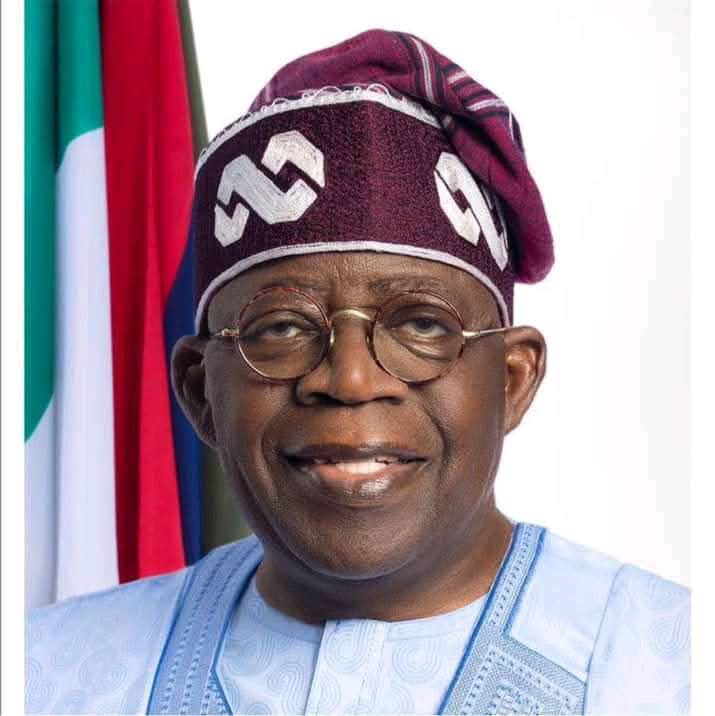
This is what Tinubu inherited. Not just an empty treasury, but an economy wheezing under the weight of past mistakes. The people were angry, and rightly so. But no president inherits an economy in this shape and fixes it overnight. Tinubu had two options: continue the deception or confront the pain. He chose the harder road.
He removed the fuel subsidy—a decision past governments only talked about. He unified the exchange rate, ending the dollar bazaar that had enriched the few. He began tax reforms. He started the work of rebuilding.
And yes, the pain came quickly. Fuel prices jumped. Food prices soared. Transport costs climbed. But let’s ask ourselves: if he had continued the subsidy scam, where would Nigeria be today? If he had kept multiple exchange rates, how would investors ever trust us again? If we kept borrowing to stabilize the exchange, pay salaries, augment monthly allocation to the states, and pay for subsidies, how would the nation have survived it?

Some people now say, “Under Buhari, rice was ₦8000.” But they forget that we were printing money and borrowing recklessly to keep prices low. Now we are paying the real price. But for the first time in a long time, we are not pretending. We are facing the music.
Fixing an economy like Nigeria’s is not a two-year job. Inflation takes time to tame. Poverty doesn’t disappear because of speeches. Roads, rail, power—they take years to build. Job creation doesn’t come from headlines. It comes from investment, education, confidence. But if a government uses the first two years to implement honest, painful reforms, the real rewards begin in years 3 to 5.
Already, there are flickers of hope. Oil production is climbing. Investors are paying attention again. The World Bank and IMF are engaging because they see a clear plan. Tax revenue is improving. Subsidy savings are now being channeled into critical infrastructure. A food security plan is underway. The bleeding is slowing.
Yes, things are still hard. The markets are brutal. Prices bite. But we are no longer in free fall. Food prices are beginning to stabilize. The rate of inflation is slowing. The currency is no longer collapsing. This is not a miracle, but it is movement.
And yet, the same people who sat quietly while Nigeria sank now shout the loudest that Tinubu has failed. Where were they when debt piled up? When subsidy scams flourished? When the naira was sold to the highest bidder? When refineries stopped working? Now they pretend to be the saviors. But Nigerians must not forget.
This is not about defending Tinubu blindly. This is about facing the truth boldly. The same people who broke the system cannot be the ones to fix it. The ones who looted the past cannot lead the future. We must not fall for that lie again.
Every Nigerian wants to feed their family, send their children to school, get a job, and live in peace. That’s not politics. That’s humanity. Tinubu’s government must continue to focus on that. But we must also give the reforms a chance to work.
Let us not deceive ourselves. There are no shortcuts. No magic bullets. We are not suffering for nothing. We are suffering to recover. And if we stay the course, the pain will pass, but the progress will remain.
Nigeria can rise. But we must not let propaganda blind us again. The hard road has begun. Let us walk it with clear eyes and strong will.
Idowu Ephraim Faleye writes from Ado-Ekiti | +2348132100608







Discussion about this post